
Kia Cadenza YG: Lubrication System / Engine Oil Repair procedures
Kia Cadenza YG 2016-2021 Service Manual / Engine Mechanical System / Lubrication System / Engine Oil Repair procedures
| Replacement |
|

| 1. |
Park the car on level ground.
Start the engine and let it warm up. |
| 2. |
Turn the engine off and open the hood.
Remove the engine cover. |
| 3. |
Wait for 5 minutes after loosening the oil filter cap to drain fully the oil in the oil filter. |
| 4. |
Drain engine oil.
|

| 5. |
Replace the oil filter.
|


| 6. |
Fill new engine oil.
|
| 7. |
Start the engine and check to be sure no oil is leaking from the drain plug or oil filter. |
| 8. |
Recheck the engine oil level. |
| Inspection |
| 1. |
Check the engine oil quality. Check the oil deterioration,
addition of water or coolant, discoloring or thinning. If the quality is
visibly poor, replace the oil. |
| 2. |
Check the engine oil level.
After warming up the engine and then 5 minutes after the
engine stop, oil level should be between the “L” and “F” marks
in the dipstick.
If low, check for leakage and add oil up to the “F” mark.
|
Selection Of Engine Oil
Recommendation
| – |
ACEA A5 or above / 5W-30 |
Allowed Oil Grade
| – |
ACEA A3 or above |
Allowed SAE Viscosity
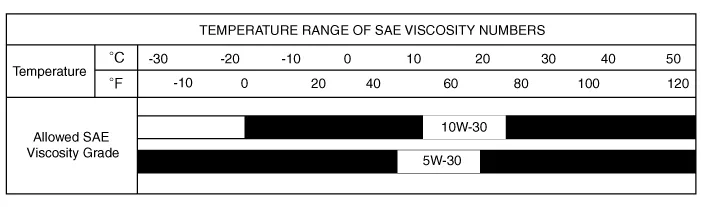
For best performance and maximum protection of all types of operation, select only those lubricants which:
|
Engine oil flow diagram
Components 1. Oil filter body2. Gasket
Other information:
Kia Cadenza YG 2016-2021 Service Manual: Surround View Monitoring Unit Repair procedures
Removal 1. Disconnect the negative (-) battery terminal. 2. Remove the glove box housing. (Refer to Body - "Glove Box Housing") 3. Remove the SVM unit (B) after disconnecting the connectors (A) and mounting bolts. Installation 1. Install the SVM unit.
Kia Cadenza YG 2016-2021 Service Manual: Blower Unit Repair procedures
Replacement 1. Disconnect the negative (-) battery terminal. 2. Remove the heater and blower unit.(Refer to HA group – heater unit). 3. Remove the blower unit (A) from the heater unit after loosening a mounting bolt and 3 screws. Make sure that there is no air leaking out of the blower and duct joints.
Categories
- Manuals Home
- Kia Cadenza Owners Manual
- Kia Cadenza Service Manual
- Body Electrical System
- Body Control Module (BCM) Description and Operation
- Engine Control / Fuel System
- New on site
- Most important about car

Copyright © 2026 www.kcadenzavg.com - 0.0271